
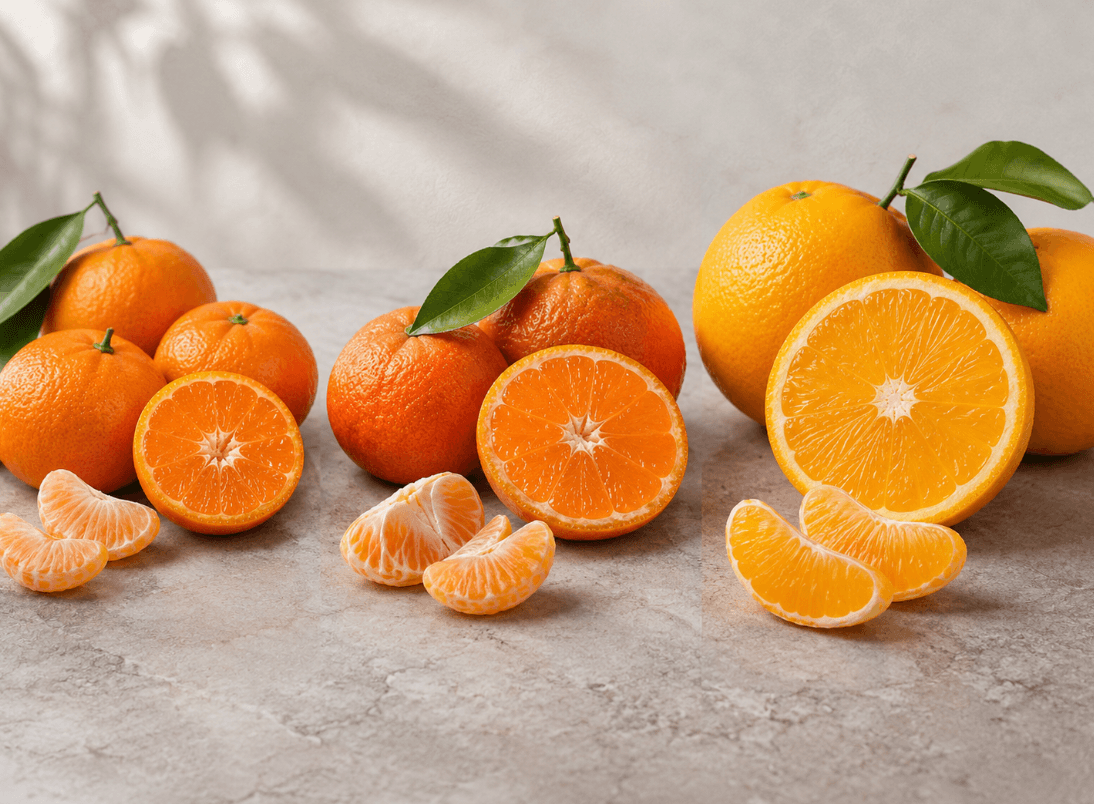
Mandarins, tangerines, and oranges are all citrus fruits, but they differ in botanical classification, appearance, flavor, peel characteristics, and juice properties. Mandarin is a broad group of citrus fruits, while tangerines are generally considered a type of mandarin. Sweet oranges belong to a different citrus group and typically have a larger size, thicker peel, and a different balance of sweetness and acidity. These differences also affect the flavor and processing characteristics of orange juice and tangerine juice.
For food manufacturers, beverage companies, and juice importers, understanding these distinctions helps when selecting citrus raw materials and sourcing juice products for specific applications.
What Is the Difference Between Mandarin, Tangerine, and Orange?
The main difference is that mandarin is a broad citrus category, tangerine is a subgroup or type of mandarin, and sweet orange is a distinct citrus group. Although they share similar characteristics, their flavor, peel, size, and juice composition can vary.
| Feature | Mandarin | Tangerine | Sweet Orange |
|---|---|---|---|
| Citrus classification | Broad citrus group | Type of mandarin | Sweet orange group |
| Typical size | Small to medium | Small to medium | Medium to large |
| Peel | Relatively thin and loose | Usually easy to peel | Generally tighter and thicker |
| Flavor | Sweet, aromatic, sometimes slightly tart | Sweet with a distinctive citrus aroma | Sweet with balanced acidity |
| Segments | Easy to separate | Easy to separate | Usually more firmly connected |
| Common uses | Fresh consumption and juice | Fresh consumption and juice | Fresh consumption and juice |
The exact characteristics depend on the cultivar, growing conditions, harvest maturity, and post-harvest handling.
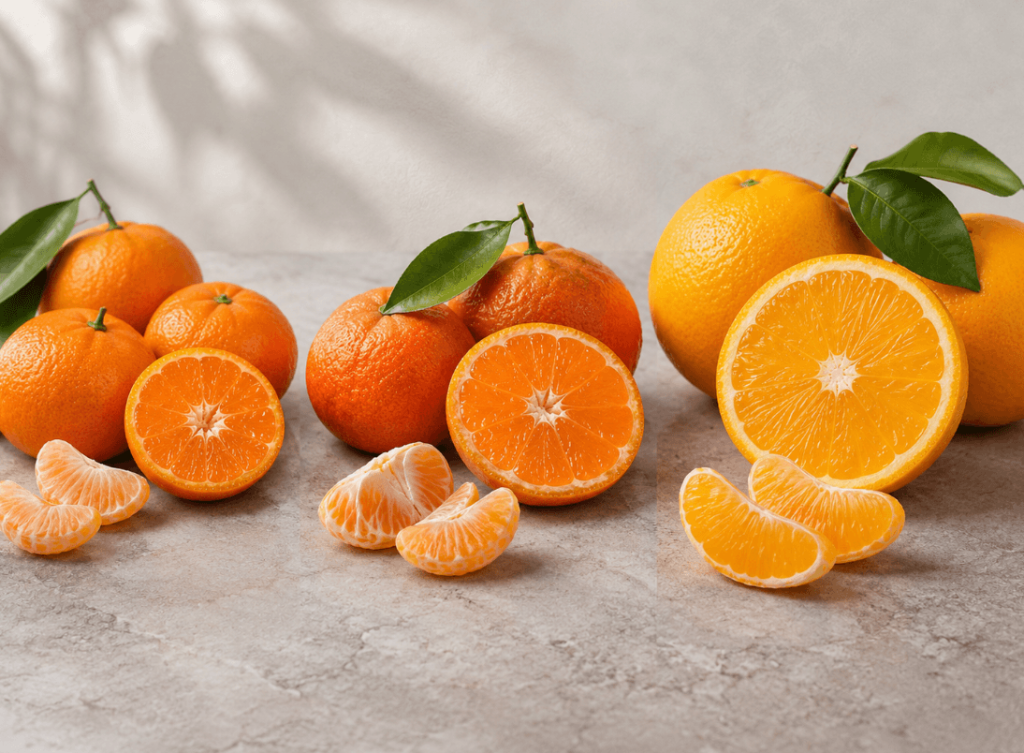
What Is a Mandarin?
Mandarin is a group of citrus fruits known for their relatively small size, loose peel, and easily separated segments. Compared with many sweet orange varieties, mandarins are generally easier to peel and have a softer, more delicate structure.
Mandarins are popular in fresh fruit markets because consumers can separate the segments without much preparation. Their naturally sweet flavor and distinctive citrus aroma also make them suitable raw materials for juice processing.
For commercial juice production, mandarin varieties can provide a recognizable citrus flavor profile. However, sweetness, acidity, juice yield, and color vary between cultivars.
Mandarin juice buyers should consider:
- Fruit variety and origin.
- Juice yield and raw material maturity.
- Natural sweetness and acidity.
- Flavor consistency between production batches.
- Processing and frozen storage requirements.
These factors help manufacturers determine whether a particular mandarin juice specification meets their beverage formulation requirements.
What Is a Tangerine?
Tangerines are commonly classified as a type of mandarin. They are generally small to medium-sized citrus fruits with an easy-to-peel skin and a sweet, aromatic flavor.
The term tangerine is widely used in commercial markets, although its exact meaning can vary by region and cultivar. Some varieties have deeper orange or reddish-orange skin, while others have a more traditional orange appearance.
Tangerines are also used in commercial juice processing. Their flavor characteristics make tangerine juice suitable for beverage manufacturers looking for a distinctive citrus profile.
When sourcing tangerine juice, commercial buyers should pay attention to:
- Whether the juice is made from fresh tangerines.
- Natural flavor and color consistency.
- Brix and acidity specifications.
- Processing method and pasteurization.
- Frozen storage conditions and packaging.
For manufacturers and importers, confirming the botanical or commercial identity of the raw material is useful when comparing supplier quotations and product specifications.
What Is a Sweet Orange?
Sweet orange is a citrus fruit group that includes many commercially cultivated varieties. Oranges are generally larger than mandarins and tangerines, with a firmer peel and a juicy interior.
Sweet oranges are widely used in commercial juice production because of their familiar flavor, juice yield, and suitability for different beverage formulations.
Orange juice products are available in different processing formats, including not-from-concentrate (NFC) juice and frozen concentrated orange juice (FCOJ).
The choice depends on the intended application, storage conditions, transportation arrangements, and production requirements.
For B2B buyers, common considerations include:
- Orange variety and raw material origin.
- Natural Brix and acidity.
- Juice purity and ingredient declaration.
- Processing and pasteurization methods.
- Concentration and storage requirements.
- Packaging format and shelf life.
Manufacturers should request product specifications and samples before confirming bulk orders.
Mandarin Juice vs Tangerine Juice vs Orange Juice
Although these juices come from closely related citrus fruits, they do not necessarily produce the same flavor or processing results.
| Comparison | Mandarin Juice | Tangerine Juice | Orange Juice |
|---|---|---|---|
| Raw material | Mandarins | Tangerines | Sweet oranges |
| Flavor profile | Sweet and aromatic | Sweet with a distinctive citrus aroma | Familiar sweet citrus flavor |
| Acidity | Variety-dependent | Variety-dependent | Variety-dependent |
| Aroma | Delicate citrus notes | Distinctive mandarin-type aroma | Traditional orange aroma |
| Commercial applications | Citrus beverages | Specialty citrus beverages | Juice drinks and beverage manufacturing |
The actual Brix, acidity, pulp content, color, and flavor depend on the raw material and processing conditions. Buyers should not assume that all products within one citrus category have identical specifications.
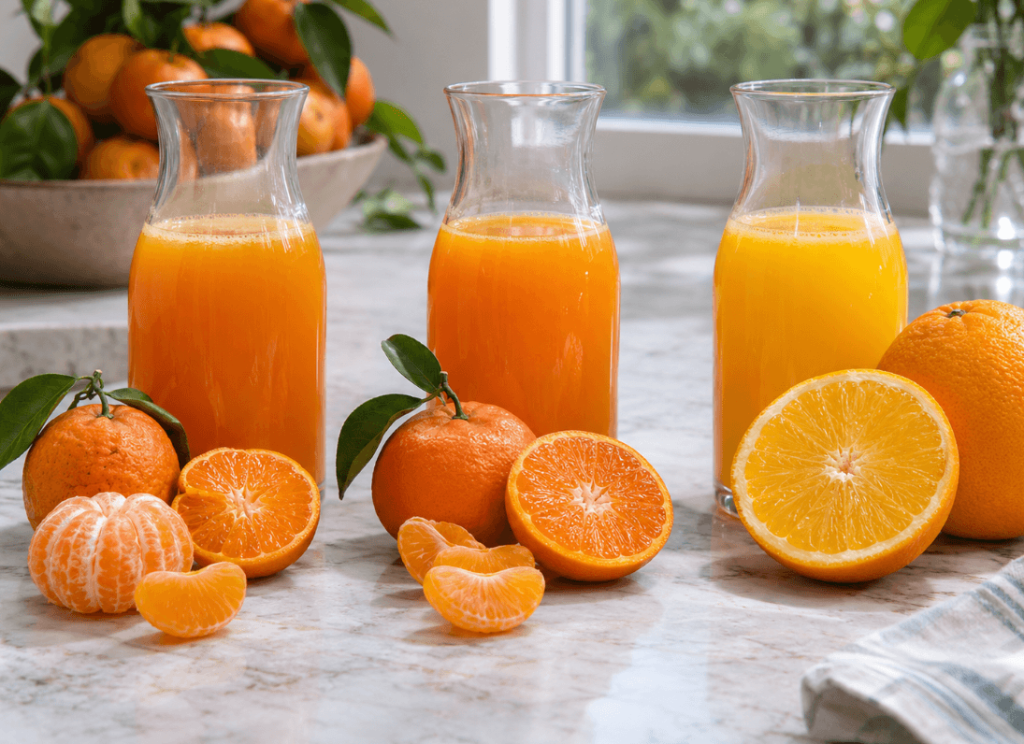
Which Juice Should Beverage Manufacturers Choose?
The choice depends on the desired flavor profile and the requirements of the final beverage.
Orange juice is suitable for manufacturers developing products around the familiar flavor of sweet oranges. It is also a practical option for buyers looking for frozen concentrated orange juice or NFC orange juice.
Tangerine juice is suitable for beverage formulations that require a distinctively aromatic mandarin-type citrus flavor.
Mandarin juice can be specified when buyers want a broader mandarin citrus profile. Since tangerine is generally a type of mandarin, buyers should confirm the exact variety and raw material description with their supplier.
For bulk procurement, the product name alone is not enough. Buyers should compare specifications, samples, processing methods, packaging, and storage conditions.
How Are Orange Juice and Tangerine Juice Processed for Commercial Use?
Commercial orange and tangerine juice production involves several stages, from raw fruit selection to extraction, processing, packaging, and storage.
The main steps generally include:
- Raw material selection: Fresh oranges or tangerines are selected according to variety, maturity, quality, and processing requirements.
- Washing and sorting: Fruit is cleaned and inspected to remove unsuitable raw materials.
- Juice extraction: Suitable equipment extracts juice while controlling peel and other unwanted material.
- Processing: The juice undergoes the processing treatment required by the product specification.
- Packaging: Juice is packed according to its intended storage and transportation requirements.
- Storage and transportation: Temperature and handling conditions are controlled to maintain product quality.
Processing methods differ between NFC juice and concentrated juice. Buyers should check whether a product is frozen, refrigerated, or shelf-stable before arranging transportation.
What Should Buyers Check When Sourcing Orange or Tangerine Juice?
Choosing a suitable citrus juice supplier requires more than comparing the quoted price per kilogram. Product specifications, production consistency, food safety controls, and export arrangements all influence the suitability of a supplier.
1. Confirm the Citrus Raw Material
Make sure the product is made from the intended citrus fruit. If your formulation requires orange juice, confirm that the supplier is offering orange juice rather than a mixed citrus product.
For tangerine juice, confirm the raw material description and whether the product meets your required variety or flavor profile.
2. Review Product Specifications
Request a technical specification sheet covering:
- Brix.
- Titratable acidity.
- Brix-to-acid ratio.
- Color and flavor.
- Pulp content, where applicable.
- Ingredient composition.
- Processing method.
- Storage temperature and shelf life.
These specifications help buyers assess whether the juice is suitable for their manufacturing process.
3. Evaluate Food Safety and Quality Management
Ask suppliers for relevant food safety documentation and quality management certificates.
For example, HACCP and ISO 22000 certification can help buyers evaluate a manufacturer’s food safety management practices. Certification scope and validity should be checked before procurement.
4. Confirm Packaging and Logistics
Frozen concentrated orange juice and frozen tangerine juice require suitable temperature-controlled storage and transportation.
Before placing a bulk order, confirm:
- Packaging type and net weight.
- Storage temperature.
- Shelf life under specified conditions.
- Shipping arrangements.
- Export documentation.
- Minimum order quantity.
5. Request Samples Before Bulk Purchasing
Laboratory specifications provide useful information, but a physical sample allows buyers to assess aroma, taste, color, and suitability for their actual beverage formulation.
Testing samples before bulk procurement can reduce the risk of receiving juice that does not match production expectations.

Sourcing Orange and Tangerine Juice from Richee Food
Richee Food is based in Yichang, Hubei, China, and specializes in citrus product development, production, sales, cold storage, and logistics distribution.
Its juice range includes orange juice and tangerine juice products, including frozen concentrated formats. The company also offers OEM options for customers with specific product and packaging requirements.
For buyers sourcing citrus juice in bulk, Richee Food can provide product information to support specification review and procurement discussions.
Relevant products include:
- Frozen concentrated orange juice.
- Frozen concentrated tangerine juice.
- Orange juice concentrate.
Buyers can review the orange juice concentrate specifications and frozen concentrated tangerine juice before contacting the company.
The appropriate product should be selected according to the required citrus variety, Brix, acidity, processing method, packaging, and storage conditions.
Conclusion
The key difference between mandarin, tangerine, and orange is their citrus classification and fruit characteristics. Tangerines are generally considered a type of mandarin, while sweet oranges belong to a separate citrus group.
These distinctions matter in commercial juice production because raw material variety influences flavor, acidity, aroma, and processing characteristics.
For beverage manufacturers and importers, selecting between orange juice and tangerine juice should be based on the intended flavor profile and verified product specifications. Confirming the raw material, processing method, quality documentation, and storage requirements helps buyers make more informed sourcing decisions.
Frequently Asked Questions
1. Is a tangerine the same as a mandarin?
A tangerine is generally considered a type of mandarin. Mandarin is the broader citrus group, while tangerine refers to particular mandarin types commonly recognized in commercial markets.
2. What is the difference between orange juice and tangerine juice?
Orange juice is made from sweet oranges and typically has a familiar sweet citrus flavor. Tangerine juice is made from tangerines, a type of mandarin, and often has a distinctive aromatic flavor. Actual taste and acidity depend on the fruit variety and processing method.
3. Is mandarin juice sweeter than orange juice?
Not necessarily. Both can have different sweetness levels depending on the variety, maturity, growing conditions, and processing. Buyers should compare Brix and acidity specifications rather than relying only on the fruit name.
4. What is the difference between NFC orange juice and frozen concentrated orange juice?
NFC orange juice is processed without concentrating the juice and subsequently reconstituting it. Frozen concentrated orange juice has had part of its water removed to increase concentration and is stored frozen. The two formats have different storage, transportation, and formulation requirements.
5. What should importers check when buying orange or tangerine juice in bulk?
Importers should verify the raw material, Brix, acidity, ingredient composition, processing method, packaging, shelf life, food safety documentation, and shipping temperature requirements. Samples should also be evaluated before confirming large orders.